
Wilderness First Aid Course
Disclaimer: This post is NOT sponsored. All the gear mentioned in this post was purchased by me at retail prices. I have no affiliations with any of the companies or brands mentioned.
Introduction
As the time for my thru-hike is quickly approaching, I continue my efforts to prepare for the hike. During this past weekend, those efforts were focused on safety and physical wellbeing preparedness. To that end, I signed up for a CPR and Wilderness First Aid (WFA) course. The course was being held at the wonder FOLC Farm and taught by Catherine Jean. I registered for the course on their website and opted into camping on the farm as the location was a couple hour drive from where I live. I also took Friday and Monday off from work for this weekend in preparation.
Friday
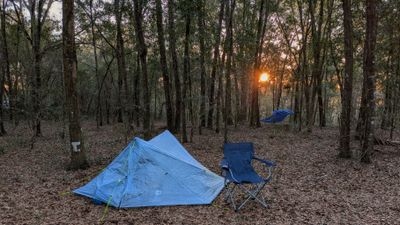
My weekend started on Friday morning where I did some last minute grocery shopping, then I packed my gear, following my lighterpack list for the AT as I used this weekend as a bit of a shakedown. I opted to back the bear can over the bear bag for this weekend. I also added a few items that I don't plan on taking on the thru-hike like a camp chair, physical notebook, and a couple other items. Once everything was packed and the time to leave arrived, I drove up to the location. I got to the farm shortly after 5 PM as the CPR class was scheduled to start at 6:30. This gave me enough time to get a quick tour of the place and setup my campsite.
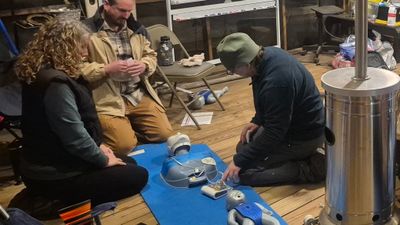
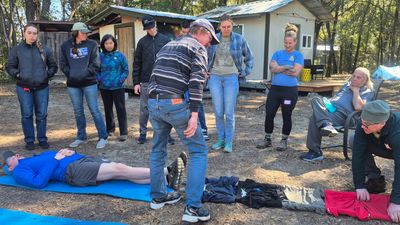
The class started with a basic introduction/getting to know each other thing. There were lots of people who worked in the outdoor field in some way. Scout leaders, people who worked for parks, trip leaders, etc. Of course, not everyone was, myself included. Some of us were just people who liked to recreate outdoors and figured getting trained in first aid would be useful. A few of the other students had already done thru-hikes, or multiple ones, but me mentioning that I am doing an AT thru-hike this year made me sort of interesting to the other students. I got a lot of questions and comments, some useful info from people who have done thrus before. Overall, it was a friendly class. For the course itself, it was a BLS CPR course, so it went over not just basic CPR, but also rescue breathing, hands only CPR for if you don't have a barrier, and AED usage. Catherine also showed off a keychain barrier with a one way valve that was light enough to be practical to carry in my First Aid Kit (FAK) for the hike.
After the class was over, I cooked some dinner using my BRS-300T stove in my Toaks 750ml pot. It was a Knorr marinara side with some beef barbacoa from a foil pouch mixed in. It was delicious and filling. It is definitely an option for food during my thru. The Ocelot Mini Plus windscreen was very fiddly to get into the stove properly and sort of blocked access to the stove a bit, but I was able to get it to light and control the flame level.
After dinner, I went to bed in my Zpacks Duplex tent with the Nemo Tensor All-Season pad and REI Magma 15 bag. As it dropped to the low 40s overnight, it was quite comfortable. I did not get cold overnight.
Saturday
On Saturday, the WFA course started at 8 AM. I got up at 7 AM to give myself time to get some breakfast and prepare for the day. For breakfast, I mixed some Carnation Instant Breakfast, some milk powder, and instant coffee with some hot water. It was delicious and a good way to cover up the taste of some mediocre instant coffee. My only complaint is the need for the milk power and the fact that those come in quart size bags when all I needed was a cup. I had to roughly guess on the amount, but it worked out ok. I wish it came in smaller serving pouches.
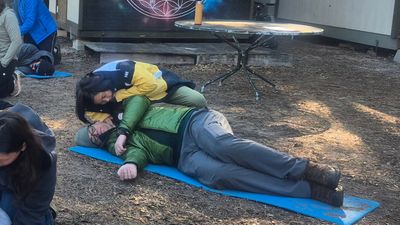
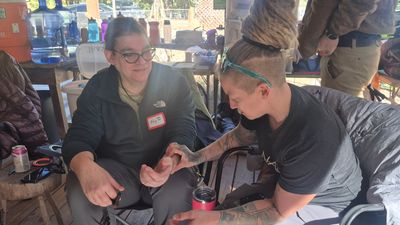
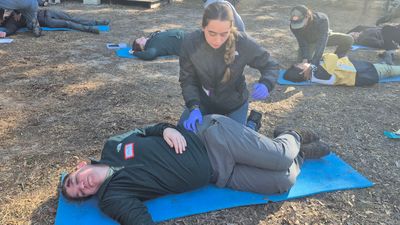
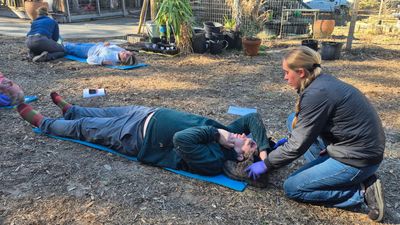
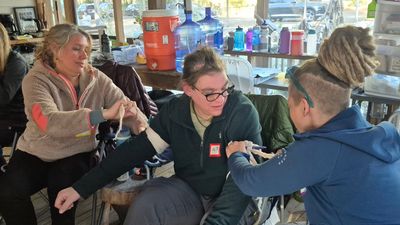
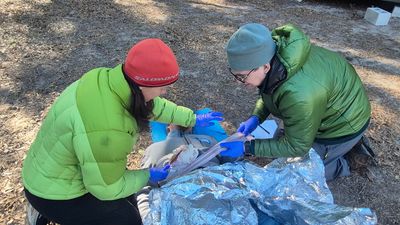
The WFA course started with the introduction again as a bunch of new people who were not there for the CPR class had joined for the WFA course. For the course, we covered how to assess the scene and patients, went over the ABCDEs of the primary survey, how to control bleeding, how to handle shock, how to consider spinal issues, and how to take things like vitals, medical history, and how to document this information. This included practice scenarios were we played both patient and responder doing each of the various steps.
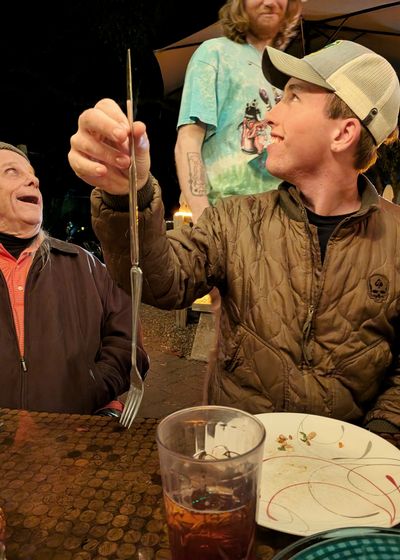
After the class ended, I ended up joining Daniel, the assistant instructor, and some of the other students, and we headed out to a local pizza place for dinner. Daniel, who is a wilderness firefighter and Wilderness EMT explained some interesting facts about fire hydrants and told the story of how he got struck by lighting. Later at the table, while waiting on our food, he discovered that his knife was magnetic. Mine was also slightly magnetic as well, but apparently not as strong as his. He was able to actually lift his fork with the knife. We even showed the waiter who thought we were pranking him.
Sunday
It got down to the 30s overnight. I woke up around 6 AM needing to use the bathroom and was a bit cold. I ended up putting on my EE Apex Torrid jacket and was warm enough. After a quick trip the compost outhouse, it was back into my bag for a bit more sleep. Again, up at 7 AM for breakfast before the class started at 8.
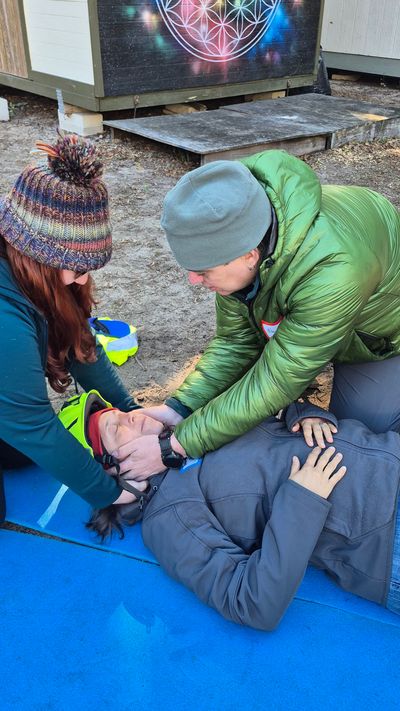
The class on Sunday continued building off of the skills we had learned the previous day. We covered soft tissue injuries, how to clean and bandage wounds, spinal clearing, animal and insect bites, various illnesses, how to improvise splints, various environmental emergencies, how to list and move patients including improvised litters, and other various medical emergencies. We even did full practice scenarios alone and in teams where we would walk up on a scene with no idea of the scenario and have to figure out what happened and help the patient as best we could until EMS arrived. One of the scenarios I was a responder for included the patient being shot by an arrow at a target range.
At the end of the class, we were presented with our certification cards and I talked with Catherine about FAKs and what I should have in mine for my hike. I will definitely be rebuilding my FAK before my hike. Another one of the students expressed interest in my gear, so I showed her my gear as I packed up to prepare for the drive home.
Conclusion
Overall, the weekend was tiring, but well worth it. I feel much better prepared for situations that hopefully will not arise while I am on my hike. The FOLC Farm also offers other higher level classes including Wilderness First Responder, which is an 8 day course that covers the same topics but more in depth as well as hosting several other outdoor related classes like edible walks and community events like potlucks. Catherine seems to have built a great community, and I will definitely be checking out some of the other classes offered in the future.